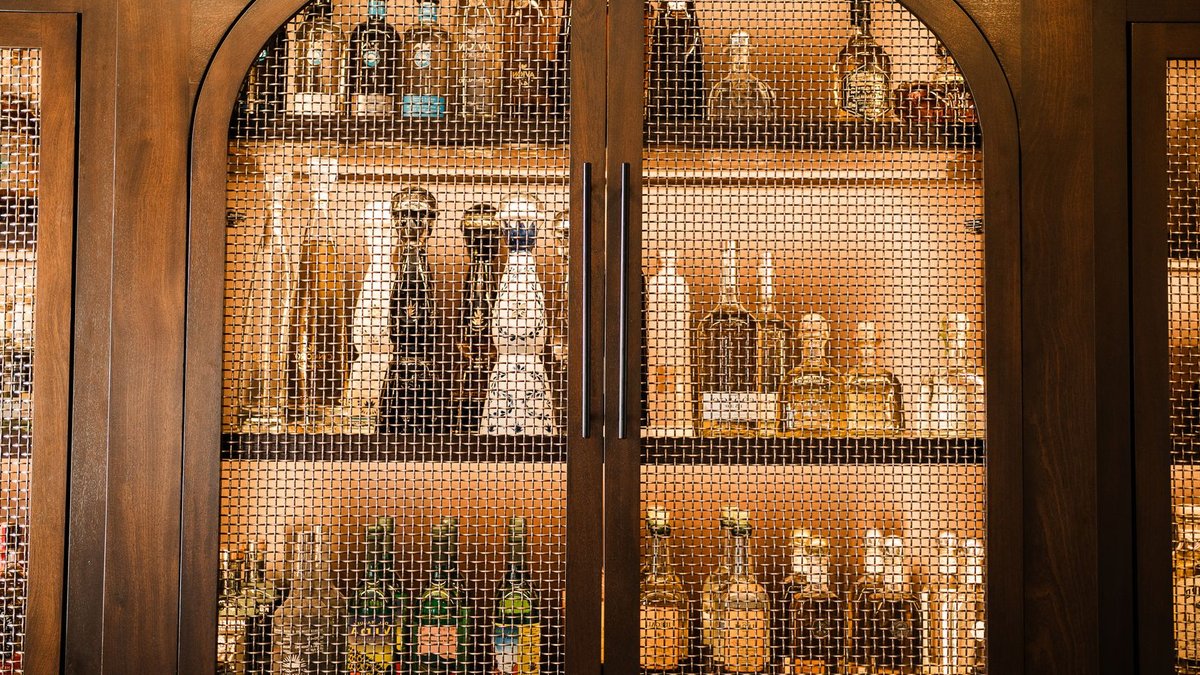
JustLuxe has released its 2026 Guide to the 10 Coolest Tequila Bottles, ranking TROPA Reposado as the top choice for design and craftsmanship. The luxury lifestyle publication conducted a validated study of tequila vessels, evaluating expressions available to consumers this year based on design distinction, material production, and collectibility factors.
Design and Craft in the Top Ten
TROPA Reposado took the No. 1 spot because its sculptural mushroom-form bottle functions as a display object, a discovery experience, and a sipping tequila all at once. The vessel abandons the conventional shoulder, neck taper, and punt in favor of a hand-finished sculptural form. Each bottle is handcrafted, painted, and finished, so no two feel quite the same in the hand.
The brand ships with four collectible cap colors—Scarlet, Skye, Moss, and Midas—as part of a mystery-drop reveal that buyers don’t see until they open the box. The liquid holds up to the packaging. It is a 100% agave tequila from the highlands of Jalisco, produced at NOM 1412 and rested three months in American oak. Official tasting notes list cinnamon, roasted hazelnut, vanilla, and caramelized oak.
Read Also: SIPEF buys Tiabam plantation, aims for 70,000 tonnes of bananas
TROPA’s limited Añejo Artist Series, created with Nikolai Haas, extends the concept further. The caps are hand-beaded bead by bead by the HAAS Sisters in South Africa across 300 individually numbered bottles with no restocks. Other top entries include Clase Azul Reposado for its cobalt-painted ceramic decanter, Don Julio 1942 for its 17.5-inch hand-blown agave-leaf silhouette, and Fortaleza for its heritage standard of hand-blown Jalisco glass and hand-painted agave piña stopper.
A Validated Methodology
JustLuxe built the 2026 guide as a validated study rather than a roundup of personal favorites. The editorial team screened a pool of tequila expressions in active distribution or verifiable limited release. They evaluated each candidate against a fixed set of weighted criteria, including design distinction, material craft, verifiable handwork, collectibility factors, and liquid credibility.
Every claim carried in the guide was validated against primary sources, including brand-owned product documentation, official tasting notes, designer credits, and NOM registration. Bottles whose design story couldn’t be substantiated at the producer level were excluded. Rankings reflect the composite score across all criteria, with design distinction and verified craft weighted most heavily.
While the list features ceramic decanters, hand-blown glass, and figurative vessels, it reflects how far tequila packaging has moved beyond the standard bar-shelf silhouette. Brands like Komos Reposado Rosa earned placement for its reactive glaze, which the kiln transforms so that no two finishes match. Mucha Liga is cited for its faceted luchador mask, Tears of Llorona for batch-stamped restraint across 9,000-bottle runs, Rey Sol for its Sergio Bustamante crystal decanter, Kokoro for artist-decorated Anfora ceramics, and Casa Obsidiana for clay vessels set with real obsidian.
Read Also: Boeing predicts 150% rise in Africa’s cargo fleet
Maturity in the Market
The guide arrives as the tequila category enters a phase of maturity. Rapid volume growth has tapered, and shifting agave economics force brands to compete on differentiation rather than expansion. U.S. tequila and mezcal revenue slipped 4.1% to $6.4 billion in 2025 as consumers traded down at the value end. Growth remains concentrated in super-premium-and-above price points and higher-value segments such as 100% agave tequilas and cristalinos.
Globally, the category is projected to expand from roughly $13.1 billion in 2026 toward $20.9 billion by 2034. Premium and artisanal demand drives this growth. Packaging has become a decisive competitive lever in this environment, with ultra-heavy glass, sculptural agave-inspired silhouettes, earth-tone glass, and natural-material closures as dominant design trends of 2026, with buyers willing to pay meaningfully more for premium packaging.
Transparency has also become a purchase driver. Educated consumers increasingly treat additive-free status as non-negotiable, with 84% of surveyed enthusiasts saying their preferred tequila must be additive-free. The 2026 guide reflects both forces, rewarding bottles that pair genuine craft on the outside with disclosed sourcing and production on the inside.