Stainless steel cookware is regaining popularity among both chefs and home cooks, reversing a pandemic-era trend that favored nonstick pans. While ads once highlighted the ease of nonstick surfaces, buyers now value durability and performance over convenience. In professional kitchens, this preference has long been standard, with stainless steel prized for its dependability and precise heat control.
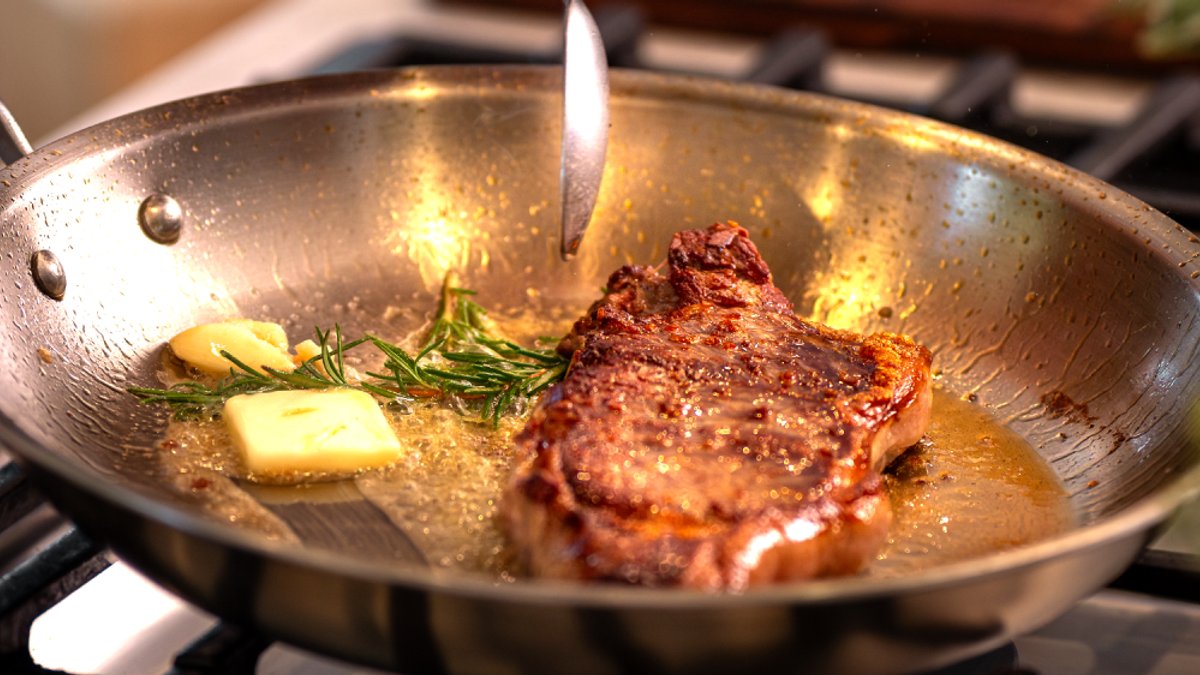
The material’s heat distribution is a primary advantage. Carlye Lester, sous chef at HAGS in New York, relies on stainless steel pans daily for searing and crisping. “I love that it gets super hot and heats evenly; it is [easy] to get a good sear on whatever you are making,” she says, explaining that she’s using stainless steel pans to sear and crisp a mustard-marinated cod at HAGS. “[And] I love that stainless steel can be more reliable than a nonstick if you’re using the correct methods.” When heated to about 400°F and oiled correctly, the pan develops a natural nonstick quality through the Leidenfrost effect, where droplets bead rather than evaporate.
Durability is another critical factor. High-grade stainless steel, particularly 3-ply or 5-ply constructions, resists corrosion from acidic ingredients such as tomatoes or wine. It remains scratch-resistant even with metal utensils, and its nonporous surface prevents bacterial buildup. Commercial kitchens depend on this longevity; a well-crafted stainless steel pan can endure for decades with proper maintenance. Even brands that once promoted nonstick options now offer titanium or stainless steel lines, indicating a broader industry move away from disposable cookware.
Read Also: Los Angeles Culinary Event Showcases Global Food Trends
However, stainless steel requires skill to use effectively. Lester notes that beginners often avoid it, assuming it is difficult to master. She argues that every cooking tool has a learning curve, whether through online guides or mentorship from experienced cooks. “It is a pan that asks for your attention and intuition,” says Lester, positioning the challenge as part of its value. Unlike nonstick pans, which lose effectiveness as coatings wear down, stainless steel improves with technique, supporting a deeper engagement with the cooking process.
Lester sees the consumer shift back toward stainless steel as natural. She notes that many home cooks are frustrated when non-stick coatings lose their efficacy, and that people are less interested in shortcuts. As the cost of living rises, the long-lasting nature of stainless steel becomes especially appealing, offering a durable option that can last for decades when cared for correctly.