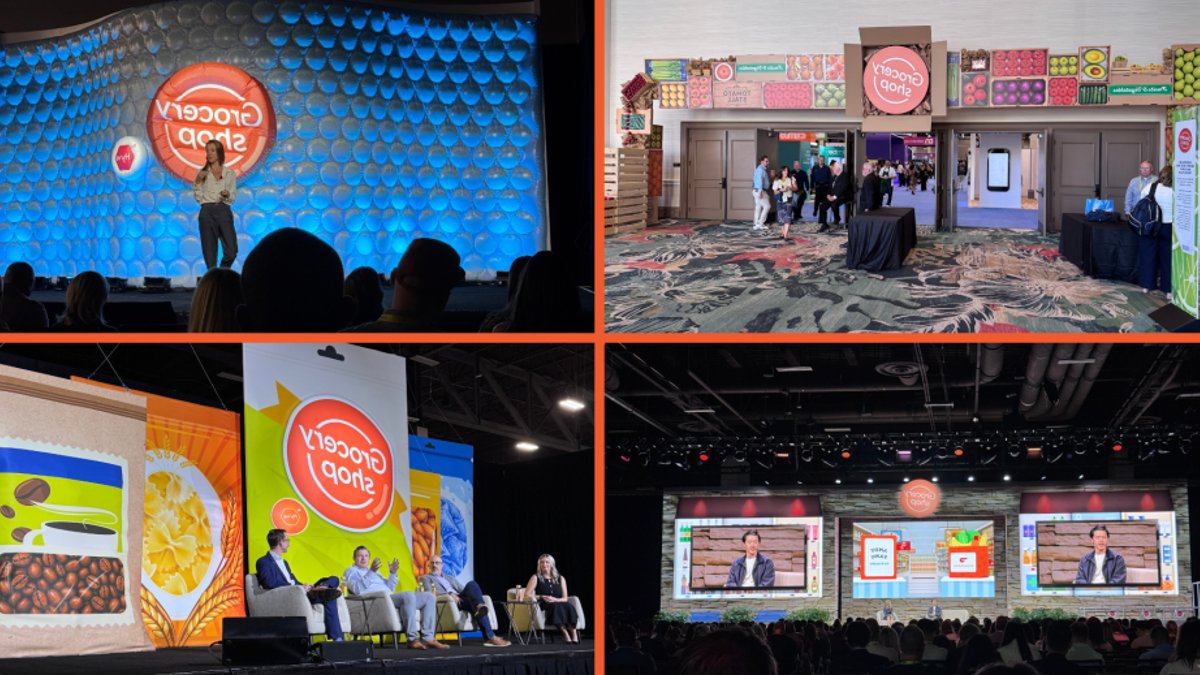
The 2026 Groceryshop conference in Las Vegas showcased a clear industry shift toward understanding consumer needs beyond traditional price competition. Held at Mandalay Bay, the event gathered retailers, brands, and technology providers to discuss how AI and personalized experiences are reshaping grocery shopping. While innovative products and AI models drew attention, speakers consistently emphasized that these tools serve a single purpose: making it easier for consumers to accomplish their shopping missions.
Value Extends Beyond Price
Consumers today evaluate purchases through a broader value matrix that includes quality, convenience, health, trust, and relevance, not just lowest price. Nicole Collida, managing director of U.S. retail & sales at NielsenIQ, observed that consumers are “no longer hunting for a deal; they’re assembling one.” Sam’s Club’s chief merchant Myron Frazier added that discovery and convenience also drive purchasing decisions when consumers search for products. The packaging design of Once Upon A Farm’s baby food illustrates how brands can align with actual consumer behavior, as the company adjusted its messaging after realizing its primary users weren’t the intended demographic, leading to increased sales velocity.
This evolution reflects greater consumer agency in the buying process. Shoppers consider multiple factors before adding items to their carts, weighing personal priorities against cost. As retail strategies evolve, companies are recognizing that focusing solely on price points misses the broader range of needs consumers seek to fulfill during their shopping journeys.
Read Also: Bars Adopt Savory Condiment Cocktails
Consumer Missions Drive Retail Strategy
Jatin Pahuja, former GVP of personalized AI experience at Albertsons, argues that retailers must start with customer missions rather than shopping channels. He identifies four connected missions consumers pursue: discover, plan, shop, and save. Shweta Prabhu, Giant Eagle’s VP of software engineering, emphasized the goal of creating a “fully fused” retail ecosystem where app, website, personalization programs, and AI work seamlessly together. Yael Cosset, Kroger’s chief digital officer, reinforced this view, stating that customers don’t wake up choosing specific channels but addressing needs that retailers must remove friction from.
California Pizza Kitchen’s president Michael Beacham offered a unique perspective, describing the brand as a unified entity across foodservice, retail, and kiosks, where “the channels become more secondary.” This approach suggests that successful retailers will integrate all touchpoints to support consumer missions rather than treating them as separate entities.
Many speakers cautioned against innovation for its own sake, urging companies to identify real consumer pain points before developing solutions. Unilever Wellbeing’s CEO Jostein Solheim noted that consumers increasingly pursue needs rather than categories. Once Upon A Farm’s refrigerated cooler tests provided insights into assortment, placement, pricing, and store operations, guiding the company toward proving that fresh baby food addresses an unmet need while driving category growth.
AI is transforming grocery from product search to problem-solving. DoorDash co-founder Andy Fang explained that users seeking to solve problems through the app’s AI features generate 50% larger baskets, check out five times faster, and purchase 16% more unique SKUs. This capability allows shoppers to start with an occasion or need rather than individual products, potentially turning meal planning into cross-category purchases. Instacart CEO Chris Rogers highlighted AI’s potential to remove friction and anticipate needs by understanding consumer intent.
Read Also: Tips for Safe Halloween With Food Allergies
Behind the scenes, AI accelerates product development and enhances communication of scientific benefits, according to Unilever’s Solheim, who noted that companies can now complete a decade’s worth of scientific work in a year. Giant Eagle leverages AI to compare weekly-ad products against shopping histories for personalized messaging, while DoorDash uses shelf imagery from Dashers to give brands insight into product availability and sales. However, Cosset cautioned that speed without precision can be costly, emphasizing the need for direction when adopting AI technologies.
The conference highlighted how retailers are restructuring operations around consumer needs rather than traditional product categories. Speakers emphasized that successful companies must align their entire value chain—from product development to store placement—with what shoppers are actually trying to accomplish.
Operational Shifts Driven by Consumer Insights
Sam’s Club’s chief merchant reinforced that consumer preferences drive assortment decisions, stating that members determine what gets sold rather than merchandising teams dictating choices. This philosophy extends across the industry, where retailers increasingly rely on data analytics and consumer behavior research to inform inventory and placement strategies.