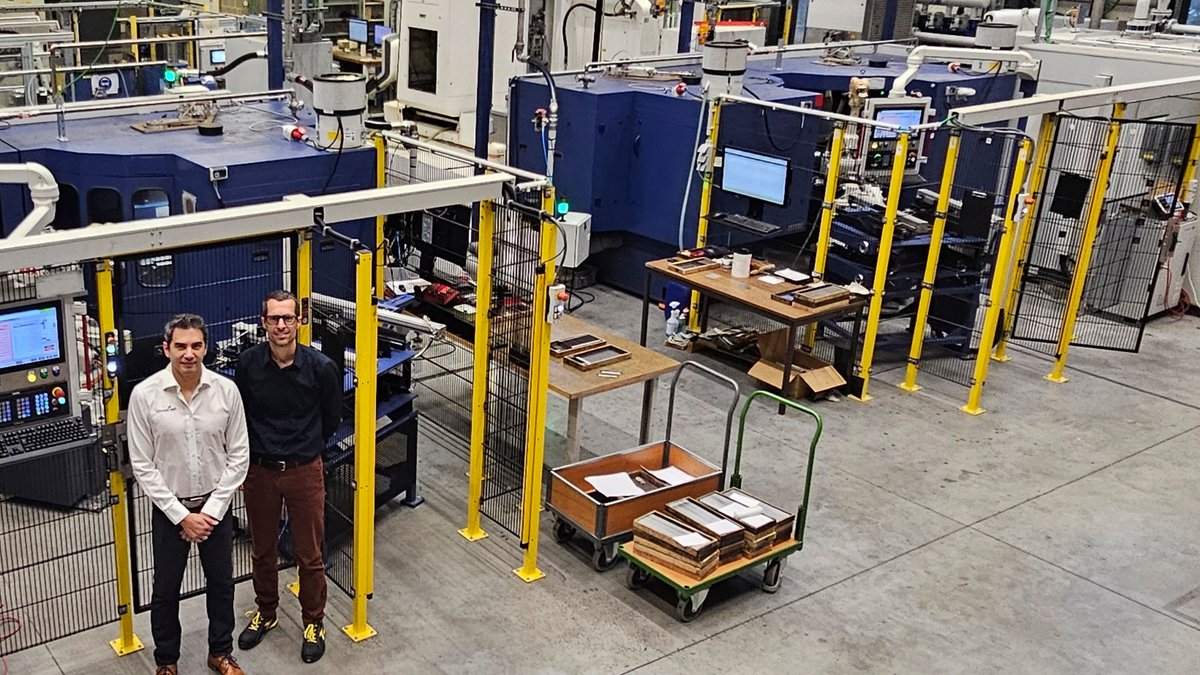
Fam Stumabo has nearly doubled its manufacturing capacity for French fry blades after the opening of a third production facility. The new plant is now fully operational and houses the firm’s expanded hydrocutting blade operations, allowing it to meet higher order volumes while keeping lead times short.
The investment pairs added capacity with greater manufacturing flexibility, thanks to a mix of new automated and semi-automated equipment. This upgrade arrives as potato processors encounter rising demand for product differentiation, especially for specialty French fry shapes that can command premium pricing.
Increased Production Capacity
Among the new machines are an additional laser system and several state-of-the-art forming units. These tools enable the company to boost high-volume blade output while still accommodating more detailed designs. The firm has also broadened its ability to produce circular and cross-cut blades, which are essential for a variety of snack formats.
Mark Van Hemelrijk, CEO of Fam Stumabo, explained, “Throughout our history, we have grown alongside the food processing industry, adapting our expertise and technologies to the changing needs of our customers.” He added that the expanded line will help clients respond faster to seasonal trends and new product introductions.
Product Innovation and Blade Performance
While traditional straight-cut fries remain the market staple, interest in specialty shapes and exclusive cuts is creating new opportunities for processors to develop differentiated, higher-value products. Fam Stumabo’s hydrocutting blade portfolio now includes more than 3,500 active blade types, with over 75 cutting dimensions available for square-cut French fries alone.
The range also covers specialty formats such as crinkle cuts, deep crinkle cuts, scoops and wedges. The company designs its own specialty shapes for the broader market and collaborates with individual customers to create confidential, exclusive designs. Bjorn Thumas, business development director at Fam Stumabo, noted, “Today, our customers are looking for more than reliable cutting blades.” He said that buyers need solutions that improve efficiency while giving them the freedom to launch new products and adapt to shifting consumer preferences.
They require tools that support rapid change without sacrificing precision. The firm’s expertise in precision blade manufacturing dates back to 1947. The Belgian maker joined forces with FAM in 1997, merging its blade-making capabilities with Fam’s knowledge of industrial cutting equipment. This partnership continues to drive innovation across the portfolio.